
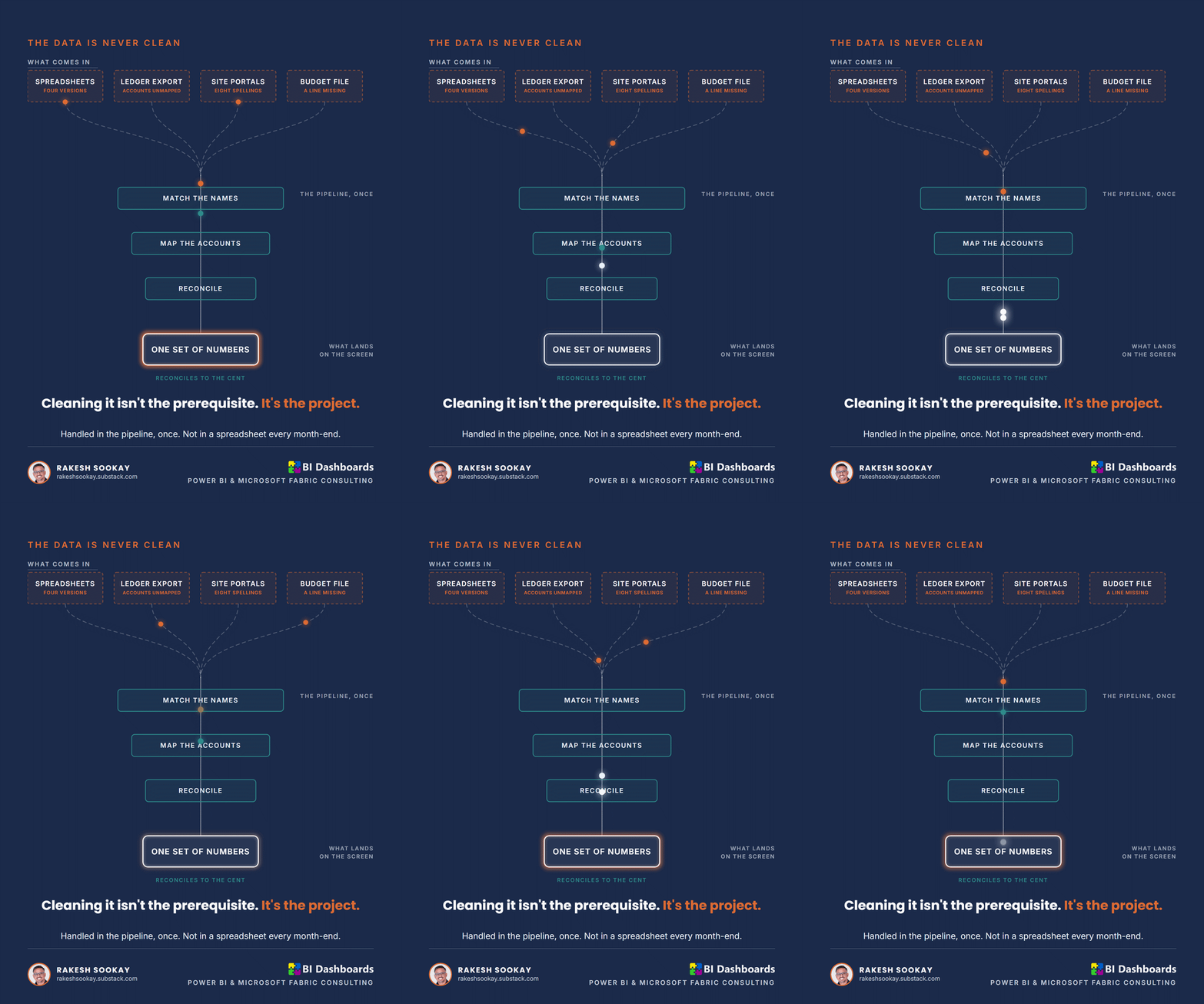
The most reasonable-sounding reason not to begin, and why it keeps finance teams stuck the longest.
“Our data isn’t clean enough yet.”
It’s the most reasonable-sounding reason a finance team gives me for not starting. And it’s the one that keeps them stuck the longest.
The plan always looks the same: sort the data out first, in Excel, and bring in Power BI once it’s tidy. I’ve heard it from financial managers, from FDs, from owners who run the numbers themselves. Different businesses, same sentence, same result: a reporting project that is permanently six months away.
Why it sounds right
The instinct comes from a good place. Nobody wants to build reporting on top of a mess, because everyone has seen what happens when a wrong number reaches the board. A dashboard on dirty data feels like painting over damp. So the team does the responsible-sounding thing: they open the spreadsheets and start scrubbing, and the build gets scheduled for the quarter after the cleanup finishes.
Why it fails
The problem is the data is never tidy. I have never once started a build with clean data. Not at any client, in any sector, on any system.
The cleanup can’t finish, because the business won’t stand still while you scrub. Every month-end adds new rows, every new customer adds a new spelling, every system change moves something that used to reconcile. The spreadsheet never gets clean enough, because the business keeps moving.
At a solar client, the same site was a “site name” in one system and a “location name” in the next, and across eight portals the spellings never lined up. The first time I pulled them into one place, the rows that should have matched didn’t. The totals stayed wrong until I got the pipeline to treat all eight names as the same site.
At a parts business running on Sage, the chart of accounts didn’t map cleanly, and a budget file came in with a line missing. A small thing, but enough to make a number wrong.
If I’d waited for any of that to be clean first, I’d still be waiting.
The position
Cleaning the data isn’t the thing you do before the project. It is the project.
The raw data comes in dirty. It gets sorted in layers on the way through, until what lands on the finance director’s screen is clean and reconciles to the cent. The mess doesn’t vanish. It gets handled in the pipeline, once, instead of by hand in a spreadsheet every month-end.
That word “layers” is doing real work. The first layer takes the data exactly as the source system gives it, mess included. The next applies the fixes: the eight spellings become one site, the accounts map the way finance actually reads them. The last layer is the version the dashboards trust. When something new breaks, and it will, the fix goes into the layer once and every report downstream is corrected. Nobody re-scrubs a spreadsheet on a Saturday.
The objection worth taking seriously
The strongest version of the pushback is not about effort, it is about trust: “If we start on dirty data, the first thing the board sees will be wrong, and we won’t get a second chance.”
But the first thing a build produces is not a dashboard. It is a reconciliation: the new numbers laid next to the old ones, argued about, and corrected until they agree. The errors surface in a working session, not in a board pack. That is the safest place a wrong number will ever appear, and it is exactly where the years-old mistakes get caught. The alternative, scrubbing quietly in Excel first, doesn’t remove that step. It just does it slower, by hand, without the pipeline remembering any of it.
What to do instead
Stop budgeting a cleanup phase. Start the build, and let the build flush the mess out. Point it at the ugliest source you have, because that is where the year of stuck is hiding. And when the first mismatches appear, treat every one as a win: each is an error that has been living in your reporting unnoticed, now with a place to be fixed once.
Tidying it up in Excel first is where teams lose a year.
Every finance team I’ve built for thought their data was too messy to start. It was. We started anyway.
If you want to know how far your own close has drifted, the scorecard is the two-minute version: ten quick questions, and the diagnosis, in control, leaking, or outgrown: https://bidashboards.co.za/month-end-scorecard/